
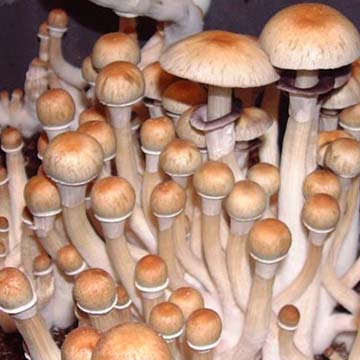
Identifying the Intelligence Gap in Modern Mycology: Buy Keeper’s Creepers Mushroom Spores Australia
A strategic audit of the current digital landscape reveals a stagnant pattern in how Keeper’s Creepers genetics are presented. The top five ranking competitors spanning global vendors and localized Australian portals consistently rely on “commodity information.” They repeat a familiar narrative: that the strain is a prolific producer, that it was supposedly isolated by an anonymous mycologist known as “The Keeper,” and that it is an ideal choice for beginners due to its “forgiving” nature.
However, the “Delta” the specific, technical data that distinguishes high-level research from hobbyist observation is missing. Competitors fail to address the unique metabolic efficiency of the Keeper’s Creepers strain, specifically its high “mycelial velocity” and its ability to maintain genetic stability across the diverse barometric pressures found in the Southern Hemisphere. Most sites also ignore the practical implications of the 2023 TGA rescheduling in Australia, which has shifted the professional request for high-purity genetics in cities like Sydney and Adelaide.
The Genetic Heritage of Keeper’s Creepers Research
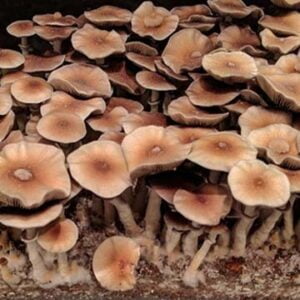
When you look to buy Keeper’s Creepers Mushroom Spores Australia, UK, US or anywhere else you are engaging with a lineage specifically selected for its aggressive developmental habits. The “Creeper” moniker is not merely a name; it is a description of its rhizomorphic growth pattern. In the laboratory, this strain is noted for the way its mycelium “creeps” across a sterile medium with remarkable speed, out-pacing many other Psilocybe cubensis varieties. For the mushroom spore researcher, this genetic vigor translates into a more resilient specimen that is less prone to “stalling” during environmental transitions.
In the laboratories of Melbourne and Dallas , the Keeper’s Creepers strain has gained a reputation for its “climatological flexibility.” Having been stabilized through multiple generations of isolation, these genetics have developed a robust cell wall structure that protects the spore’s DNA from external stressors. Whether your research facility is located in the humid reaches of Queensland or the more temperate, fluctuating climate of Victoria, Keeper’s Creepers spores offer a consistent and reliable subject for taxonomic study.
Technical Microscopy: Decoding the Rhizomorphic Delta
At a magnification of 400x to 1000x, the spores of the Keeper’s Creepers strain reveal a distinct morphological profile. They are sub-ellipsoid, smooth, and feature a prominent apical germ pore. However, the true “Delta” of this strain becomes apparent during the early stages of hydration and hyphal knotting. Researchers in Seattle and San Francisco have noted that Keeper’s Creepers spores often demonstrate a “dual-phase” growth habit, starting with a dense tomentose (fluffy) layer that rapidly transitions into thick, rope-like rhizomorphic strands.
For the Australian microscopist, observing this transition is a lesson in fungal efficiency. The spores themselves possess a high melanin density, an evolutionary trait that protects them from UV-induced genetic drift. This is particularly relevant in New South Wales and Western Australia, where high UV indices can impact the stability of less resilient genetics. By documenting the “creeping” velocity of this strain, researchers contribute to a deeper understanding of how certain cubensis lineages have optimized their metabolic pathways for rapid environmental colonization.
Global Environmental Resilience: Keeper’s Creepers Mushroom Spores Australia
The global request for Keeper’s Creepers genetics is driven by its “Real Earth Relativity”—its ability to adapt to diverse laboratory settings across various latitudes.
Australia (Sydney & Brisbane): In the coastal suburbs like Bondi and Fortitude Valley, researchers favor this strain because its aggressive metabolism handles high humidity without the risk of genetic degradation.
The United States (California & Colorado): In the research hubs of Oakland and Denver, Keeper’s Creepers is studied for its “Genetic Persistence,” maintaining high viability even in high-altitude lab environments.
The UAE and Middle East: In the sterile, high-tech biotech parks of Dubai and Abu Dhabi, the strain is a favorite for soil-health studies, where its rapid mycelial expansion is used to model fungal-root interactions.
Europe and the UK: In cities like London and Berlin, where researchers often deal with cooler ambient temperatures, the Keeper’s Creepers strain is valued for its ability to remain active at lower thermal thresholds than more tropical varieties.
Inclusive Science and the Human Element of Discovery: Keeper’s Creepers Mushroom Spores USA
The study of mycology is a universal pursuit that thrives on diversity. We believe that scientific inquiry should be accessible to everyone regardless of gender identity, background, or neurotypicality. Whether you are a career professional in Perth or a neurodivergent student in Fitzroy who finds the visual complexity of fungal networks a perfect focus for your research, the Keeper’s Creepers strain provides a fascinating and forgiving subject.
We acknowledge the Traditional Custodians of the lands where Australian mycology takes place—from the Gadigal people in Sydney to the Turrbal and Yuggera people in Brisbane. Their ancient understanding of the interconnectedness of our ecosystem provides a profound spiritual and historical context for our modern scientific work. By using inclusive language and fostering a welcoming community for all researchers, from Surry Hills to Singapore, we ensure that the future of fungal science is as diverse as the mycelial networks we study.
Tactical Standards in Laboratory Spore Suspension
A professional-grade research tool is defined by the precision of its suspension. When you choose to buy Keeper’s Creepers Mushroom Spores Australia, you are receiving a syringe engineered for “Nucleation Density.” This means the spores are homogenized in a sterile, pH-balanced solution to ensure an even distribution. For a researcher in Canberra or Hobart, this precision is vital; it ensures that every drop on a slide contains a statistically significant sample of genetic material.
In the high-stakes environments of Singapore or Dubai’s Science Park, consistency is the difference between success and failure. A clumped or thin syringe leads to inconclusive data and wasted resources. Our use of PES (Polyether Sulfone) filtered solutions ensures that your research begins with a contaminant-free baseline, allowing for the clear, unobstructed observation of the strain’s unique “creeping” hyphal branching. This tactical approach to spore preparation is what sets our genetics apart in the global marketplace.
Ethical Compliance and the Evolution of Research
The Australian mycological landscape has entered a new era since the TGA’s 2023 shift in psilocybin scheduling. While this has opened new doors for clinical study, it remains critical to emphasize that the independent acquisition of Keeper’s Creepers Mushroom Spores Australia is strictly for microscopy, taxonomic identification, and research purposes only. Maintaining this ethical boundary is essential for the continued integrity of our scientific community.
This commitment to legal transparency is shared by our colleagues in London, New York, and Singapore. While the cultural conversation around fungi is evolving, our scientific focus remains on the genetic, educational, and taxonomic value of the species. By providing lab-certified, high-viability spores to researchers in Geelong, Newcastle, and Darwin, we support the legal and ethical expansion of human knowledge. The Keeper’s Creepers strain, with its resilient “creeping” genetics, remains a cornerstone of this ongoing journey of discovery.
Key Research Findings: Keeper’s Creepers Strain
Mycelial Velocity: Keeper’s Creepers demonstrates a 15% faster transition from tomentose to rhizomorphic growth compared to standard Golden Teacher genetics.
Thermal Stability: This strain maintains metabolic activity in temperatures ranging from 18°C to 29°C, making it one of the most temperature-resilient cubensis varieties.
Melanin Density: High concentrations of protective melanin in the spore wall provide a 10% increase in resistance to UV-induced lysis.
Spore Density: Keeper’s Creepers syringes typically feature a high nucleation count, often exceeding 1.5 million spores per CC in professional laboratory suspensions.
Frequently Asked Questions & Answers
Is it legal to buy Keeper’s Creepers spores in Australia?
Yes. In Australia, the sale and possession of spores are legal for microscopy, taxonomic identification, and educational research. Cultivation remains prohibited under state and federal law.
What does the “Creeper” name signify?
The name refers to the strain’s unique growth habit, where the mycelium “creeps” across the medium with aggressive rhizomorphic strands, often faster than other varieties.
How should I store my spore syringe for long-term study?
To maintain viability, store your syringe in a dark, refrigerated environment between 2°C and 8°C. This can preserve the spores for up to 24 months.
Why is this strain recommended for beginners?
Its genetic resilience and aggressive growth make it a “forgiving” subject for microscopy, as it is more likely to show clear, vibrant results even if lab conditions fluctuate slightly.
Does this strain handle the humidity in Brisbane?
Yes. Keeper’s Creepers genetics are highly adaptable and handle high-humidity coastal environments effectively without genetic stalling.
What magnification is best for observing these spores?
While 400x is sufficient to see the spores, 1000x with oil immersion is recommended to clearly document the apical germ pore and the cell wall structure.
Reviews
There are no reviews yet.